
In golf, it’s tempting to believe that progress is simply a matter of time. More rounds squeezed into busy weeks. Extra range sessions before dusk. Another bucket of balls in search of something that clicks. Yet for many players, improvement remains just out of reach. Not because they aren’t trying, but because effort alone doesn’t guarantee evolution. And this is where the misunderstanding often lies.
Improvement ingolf is not simply a function of repetition. Left unchecked, repetition canquietly reinforce the very patterns a player is trying to change. Without clarity, feedback, and structure, practice becomes familiar rather than progressive.
True development requires intention. It requires understanding what you are changing, why you are changing it, and whether the adjustment is genuinely working.
That is the difference between activity and advancement.
At elite level, that difference is obvious. Professional players don’t simply practise more. They practise with purpose. Every session is structured. Every metric is trusted. Every adjustment is measured.
The environment is controlled. The feedback is reliable. The process is intentional. And that’s where the real gap often lies.
Outdoor golf will always be central to the game. There is nothing quite like walking a course, feeling the turf underfoot, and watching a well-struck ball climb into open (hopefully blue) sky.
But structured development rarely happens in those perfect conditions (and certainly not in the UK!).
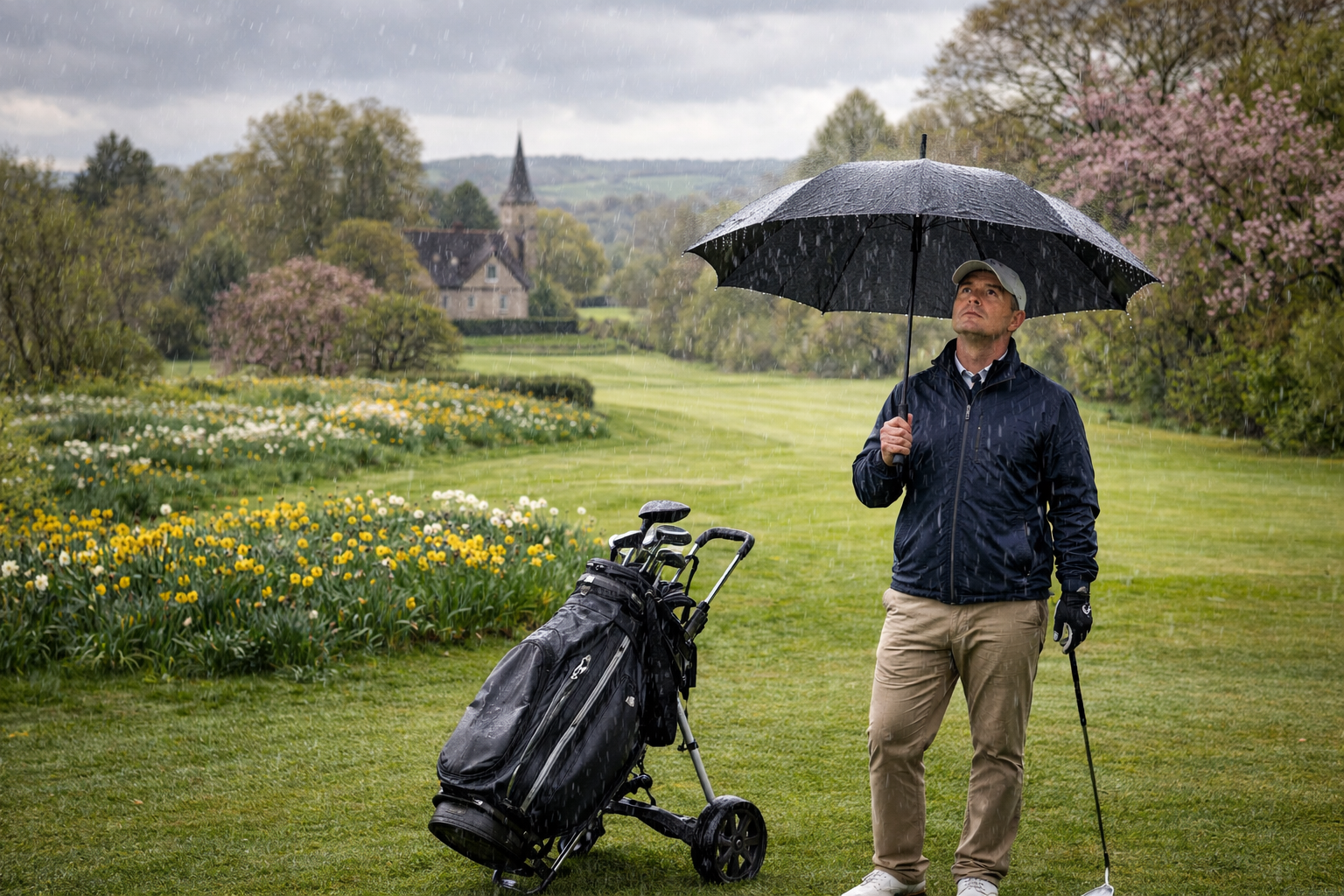
Practice sessions are shaped by fading daylight, sudden rain, crowded ranges, and uneven feedback. A session ends early because the weather turns. A range mat subtly alters your strike. Ball flight is guessed rather than confirmed. Distractions creep in, and repetition is broken.
None of these moments feel significant in isolation. Yet together, they interrupt rhythm and dilute focus. Over time, they make structured refinement really difficult.
When friction increases, focus decreases.
And when feedback isn’t consistent, confidence rarely builds. Improvement becomes intermittent rather than compounding.
Skill development thrives on clarity.
A repeatable environment removes noise and distractions, and it introduces much needed stability. When conditions remain constant, a golfer can isolate what really matters. Small changes become more visible, and cause and effect becomes very clear.
Reliable launch monitor technology is part of that equation. Data only becomes useful when it can be trusted. High-end systems such as Trackman are used across professional tours and elite training environments precisely because measurement reliability underpins meaningful refinement.
But technology alone isn’t the full answer. Precision needs a home.
· Lighting that reduces distraction.
· Acoustics that encourage focus.
· Space that allows natural movement.
· A layout that feels intentional rather thanimprovised.
When environment and technology are completely aligned, practice becomes productive instead ofreactive.
There is a fundamental difference between installing a simulator and creating a performance environment. The former is equipment. The latter is infrastructure.
For homeowners who take their golf seriously, that distinction matters. These are not impulsive upgrades. They are considered additions to properties where quality, integration, and long-term value shape every decision.
For commercial venues, the same principle applies. A performance-led environment signals credibility. It strengthens coaching provision. It supports serious golfers while still welcoming social players. It elevates perception.
And perception shapes positioning.
The most successful venues do not chase trends. They invest in experiences that hold their standard over time.
Sustainable progress requires consistency. And consistency requires accessibility.
When practice is easy to access, enjoyable to use, and comfortable to return to, it becomes part of routine rather than an occasional effort. This is where performance and lifestyle intersect.
A purpose-built GolfSpace is designed from first sketch to first tee shot to feel permanent, integrated, and intentional. Not an afterthought. Not a spare-room compromise. A space that earns its place.
For residential clients, that means year-round refinement without compromise.
For commercial partners, it means offering guests a credible performance experience that extends beyond seasonal play.
In both cases,the goals are the same:
· Remove friction.
· Support focus.
· Allow improvement to compound.
Watching elite golf stirs something powerful. It sharpens ambition. It makes improvement feel possible.
But the real work rarely looks dramatic. It happens quietly, in structured sessions where clarity matters more than volume. Where refinement replaces repetition. Where small adjustments are measured, understood, and trusted.
Playing more is enjoyable. Improving is transformative.
And when the environment supports precision, repeatability, and focus, progress no longer feels sporadic. It becomes predictable. Built deliberately, rather than hoped for.
Whether foryour home or your venue, build an environment where improvement is deliberate,not accidental. Explore the GolfSpace Standard and speak to our team about what’s possible.