
The best-designed GolfSpaces don’t simply impress when they’re first completed. They continue to feel right years later. From the way the room flows to the materials, lighting and integration of technology, the decisions made at the beginning determine whether a space ages gracefully or quickly begins to feel dated.
It’s natural to think about future-proofing the technology within a GolfSpace. Launch monitors will evolve, software will improve and new capabilities will continue to shape the indoor golf experience.
But the room itself deserves the same long-term thinking.
A GolfSpace is a significant addition to a home, and the choices made during its design will influence how it looks, feels and functions for many years. Trends may provide inspiration, but lasting appeal usually comes from something quieter: a well-considered layout, quality materials, carefully integrated technology and a clear understanding of how the room will be used.
The design decisions that matter most are rarely the loudest. They are the ones that continue to make the space feel effortless every time you walk into it.
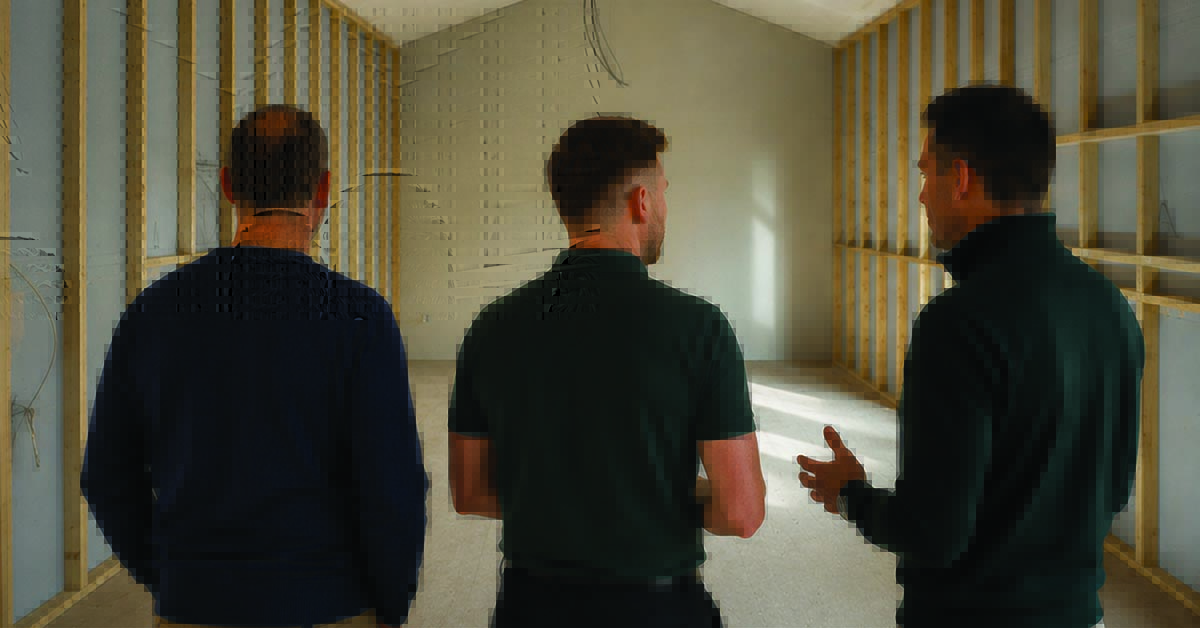
A successful layout begins long before finishes, furniture or technology are chosen. It starts with understanding how people will move through the room and how the space needs to work in practice.
Where will golfers prepare to play? Where will clubs and equipment be stored? Will friends and family be watching? Does the room need to move easily between focused practice, relaxed course play and entertaining?
These questions may appear practical, but they have an enormous influence on the finished experience. A room can be visually impressive and still feel awkward if seating interrupts play, storage is difficult to access, or people need to move through the hitting area.
When the layout has been properly considered, the room feels instinctive. Golfers have the space they need, guests can settle comfortably and everything appears to be exactly where it belongs.
That ease of use will be appreciated long after the novelty of a newly completed room has passed.
Lighting is one of the most influential elements within any GolfSpace, yet it can easily become an afterthought.
The room needs sufficient, carefully controlled light for play, without interfering with projection or creating distracting shadows. However, a GolfSpace may also need to feel relaxed and welcoming when it is being used socially.
A single lighting treatment is unlikely to serve both purposes equally well.
Layered lighting allows the atmosphere to change with the way the room is being used. Focused illumination can support practice, while warmer ambient lighting can soften the space for an evening with friends or family. Architectural lighting can highlight materials and cabinetry without drawing attention away from the screen.
The value of this flexibility becomes clearer over time. Rather than being restricted to one mood or one purpose, the room can adapt naturally throughout the day and across different occasions.
It can be tempting to choose materials because they are immediately striking. However, the most successful interiors are not always the ones that make the strongest first impression.
They are the ones that continue to feel appropriate.
Natural textures, balanced tones and high-quality finishes tend to age more gracefully than details chosen purely because they are fashionable. Well-made cabinetry retains its presence. Timber develops character. Carefully selected flooring continues to provide comfort and performance without making the room feel tied to a particular moment in design.
Durability matters too. A GolfSpace is made to be used, and its materials need to respond accordingly. Flooring must withstand repeated play, wall treatments need to protect the room discreetly and furniture should remain comfortable through long practice sessions and social evenings alike.
Quality is not simply about how something looks when it is installed. It is about how well it continues to perform.
Golf technology will inevitably change faster than interior design. That makes thoughtful integration particularly important.
A GolfSpace should never feel as though a collection of equipment has been placed into an otherwise finished room. Screens, speakers, controls, cables and storage should be considered as part of the architecture from the outset.
When technology is integrated well, it is available when needed without dominating the space. Cabling remains hidden. Equipment has a natural home. Controls are easy to access, while the infrastructure allows individual elements to be updated without dismantling the entire room.
This creates a calmer, more refined environment, but it also gives the space greater flexibility in the future. The technology can evolve while the fundamental design of the room remains intact.
Acoustic design is another decision that may not be immediately visible, but its impact is felt every time the room is used.
A golf shot creates energy and sound. Without proper treatment, that sound can become harsh within an enclosed space, particularly when it is combined with conversation, course audio and entertainment systems.
Carefully integrated acoustic treatments help to control that environment. They improve the quality of sound within the room, make repeated practice more comfortable and reduce the extent to which noise travels elsewhere in the home.
The best treatments do this discreetly. Rather than appearing as technical additions, they become part of the wall finishes, cabinetry and overall design language.
It is a detail people may never consciously identify, but they will notice that the room feels better to spend time in.
Perhaps the most important long-term decision is to design around the people who will use the room.
A trend-led space begins with how a room should look. A people-led space begins with how it should support everyday life.
For one homeowner, that may mean a private environment for regular practice. For another, it may be a family room where golf sits alongside films, sport and entertaining. Someone else may want a quieter retreat that feels connected to the rest of the home without becoming another conventional living space.
There is no single aesthetic or layout that will work for every client. The lasting value comes from creating something personal enough to remain relevant even as tastes and technology change.
When a room reflects the way its owners genuinely live, it is far less likely to feel dated.
The best GolfSpaces are not designed around the impact of the reveal alone. They are designed for the hundreds of ordinary moments that follow.
An hour of practice after work. A round with friends on a winter evening. Children discovering the game. A major championship watched together. A quiet morning spent working on a swing.
Those are the occasions that ultimately determine the value of the space.
At GolfSpace, we combine Trackman technology with considered design and artisan craftsmanship to create rooms that are as enjoyable to live with as they are impressive to experience.Every decision, from the layout and lighting to the materials and hidden infrastructure, is made with the same question in mind:
Because timeless design is not about resisting change. It is about creating a strong enough foundation for the room to evolve without losing what made it special in the first place.
A beautifully designed GolfSpace begins with understanding how you want to use it, both now and in the years ahead.
Whether you are considering a dedicated golf studio or a multi-use leisure room, GolfSpace provides a complete, consultative service from the first design conversation to the first tee shot. Let’s have a conversation.